Popular Searches:
Keep up to date
Sign up today for exclusive offers and incredible experiences you won’t want to miss at Queen Elizabeth Olympic Park.
Sign up now






Learning from legacy neighbourhoods
As part of LLDC’s long-term commitment to the place we have created, it is important that we assess delivery against project objectives and evaluate the environmental and social performance of the homes, buildings and neighbourhoods we have delivered with our developer partners. We want to understand what has worked well and what hasn’t, whether or not buildings are performing as designed, and what matters to residents. With many homes remaining to deliver, we have an opportunity to implement lessons learnt into future developments and inform future decision-making. And as a public sector organisation and Mayoral Development Corporation we also feel it is important to share these learnings with the wider industry.
Post Occupancy Evaluation
Post Occupancy Evaluation (POE) provides a critical tool for driving continuous improvement in the built environment. It assesses whether developments meet the needs of residents and communities, as well as sustainability, functionality, and long-term performance objectives.
POEs are gaining traction and becoming a funding requirement for projects including the GLA Affordable Homes Programmes and planning requirements for some Local Planning Authorities. Regardless of funding or planning considerations, LLDC has made the decision to make POE a landowner requirement at our future developments in order to spearhead industry best practice.
Undertaken on the first homes delivered as part of the 2012 Olympic and Paralympic Legacy and covering over 1,000 homes, LLDC’s POE is one of the largest studies of its kind in the UK. Conducted over a five-year period by multi-disciplinary teams including academic partners, our POE combines qualitative and quantitative data and provides valuable insights for the built environment industry.
Informed by the findings from our POE studies and broader insights from our experience planning, designing and delivering new neighbourhoods, we have developed recommendations for landowners, developers, estate managers and consultant teams, from project inception through to estate management.
An overall project summary, recommendations for future developments and considerations for undertaking POE can be found in the following report:
Learning from Legacy Neighbourhoods: Post Occupancy Evaluation (2026)
Our studies, commissioned by LLDC as the landowner, have been used to test and develop our approach to POE going forward. We employed a mixed-method approach, combining technical building performance data with in-depth engagement, gathering residents’ views on the overall neighbourhood, their block, and their individual home.
Descriptions of the POE methods used by LLDC with lessons learnt, as well as resources such as surveys and interview templates for use by others, are available in the following document:
Post Occupancy Evaluation: Methods & Resources (2026)
Chobham Manor Findings
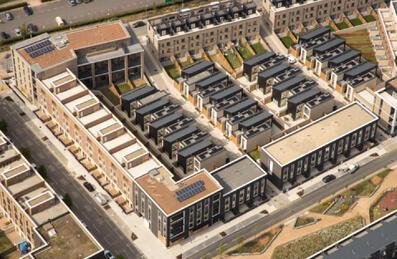
Chobham Manor is LLDC’s first fully completed legacy neighbourhood of 880 homes for which we have concluded the POE. The study was conducted in three stages across the four development phases, between 2019 and 2024.
The below emerge as the most notable findings at Chobham Manor. The findings, combined from across the different POE methods used, have fed into interventions at Chobham Manor and the wider Queen Elizabeth Olympic Park, and they have formed the basis of our recommendations for future developments.
- Identity, belonging and community: Residents generally enjoyed living in Chobham Manor, reporting a strong sense of identity, belonging and community across all four phases.
- High satisfaction and pride: About 75% of respondents were satisfied with the neighbourhood, and 79% felt proud of their home.
- Design strengths: The modern architecture, generous public realm and well-planned layout were highly valued.
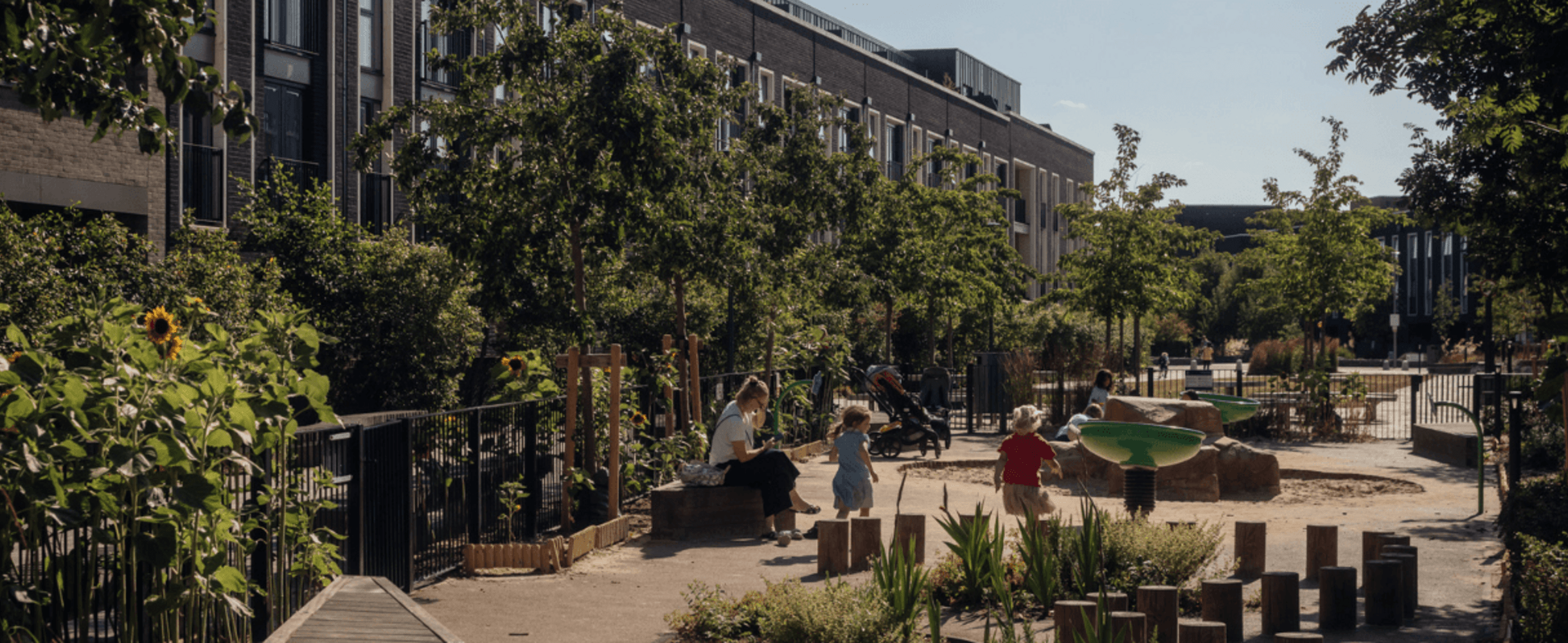
- Access to nature: Across all phases, 61% of residents ranked trees and green spaces as the feature near to their home that they valued most.
- Distinctive character: The area was described as “London, but with the feel of a small town,” highlighting its unique atmosphere.
- Community resilience and activity: Mutual support systems during the COVID-19 pandemic evolved into ongoing in-person and online initiatives to reinforce social connections.
- Positive home performance: Daylight and winter warmth were highly rated, and homes performed well on energy use, supporting comfort and wellbeing.
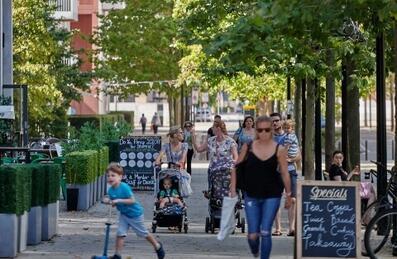
- Everyday convenience and quality of life: Walkability, ease of getting around, proximity to schools, and access to green and play spaces underpinned residents’ enjoyment of the area.
- Summer overheating: Summer overheating was prevalent, particularly in single-aspect homes.
- Concerns about heating costs and maintenance: District heating affordability and unclear maintenance responsibilities were recurring frustrations.
- Safety and management gaps: Residents felt that night-time safety and aspects of neighbourhood and block management needed improvement to enhance everyday convenience and security.
More detailed findings can be found in the following report:
Post Occupancy Evaluation: Chobham Manor Findings (2026)
In 2020-2022 we undertook a pilot POE study at Chobham Manor Phase 1. The methodology, detailed findings and recommendations from the pilot POE study can be found in the following report:
Chobham Manor Phase 1: Post Occupancy Evaluation Study (2022)